

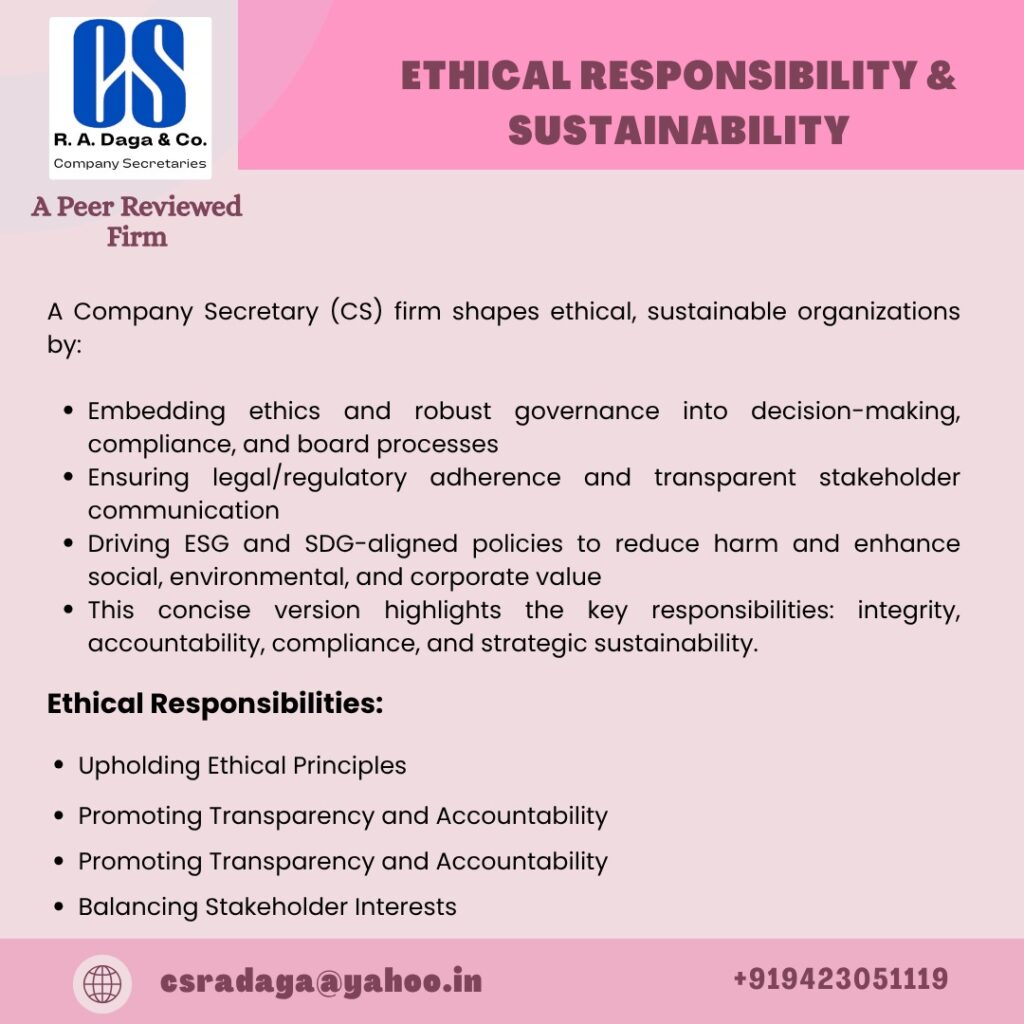
Understanding Ethical Responsibility in Business
- Transparent disclosures and communication.
- Fair treatment of employees and vendors.
- Responsible decision-making by the Board.
- Building trust with investors, regulators, and the public.
The Rising Importance of Sustainability
Businesses today are being evaluated not just on financial performance, but on how responsibly they operate. This includes:
- Managing carbon footprint and environmental impact.
- Promoting inclusive workplaces and social equity.
- Ensuring transparency in governance practices.
Investors, consumers, and regulators are placing increasing emphasis on sustainable practices. Organizations are expected to align their operations with the United Nations Sustainable Development Goals (SDGs).
Company Secretaries are uniquely positioned to integrate sustainability into:
- Internal policies and Board agenda items.
- Corporate disclosures such as ESG reporting and Business Responsibility and Sustainability Report (BRSR).
- CSR project evaluations and effectiveness tracking.
Role of the Company Secretary in Driving Ethical and Sustainable Practices
A Company Secretary bridges the gap between the management, the Board, and stakeholders. Their role has expanded from statutory compliance to being custodians of ethics and sustainability.
Some of the key responsibilities in this area include:
Advisory Role
- Guiding the Board on ethical governance norms.
- Ensuring adoption of ESG and CSR frameworks.
- Helping design codes of conduct and ethics policies.
Compliance Monitoring
- Ensuring adherence to Companies Act, SEBI LODR, and other regulatory mandates related to sustainability.
- Filing accurate and timely disclosures on ethical practices and sustainability metrics.
Policy Implementation
- Overseeing implementation of whistleblower and grievance redressal mechanisms.
- Encouraging internal training on ethics and responsible practices.
Reporting and Documentation
- Drafting BRSR reports, CSR reports, and other sustainability disclosures.
- Maintaining minutes, registers, and documents in a transparent and accountable manner.
The Future of Governance Is Ethical and Sustainable
It is crucial for CS professionals to:
- Stay updated with ESG-related amendments and circulars.
- Develop capabilities in sustainability reporting frameworks such as GRI, SASB, and Integrated Reporting.
- Promote a corporate culture that values long-term impact over short-term profits.
Conclusion
As trusted governance professionals, we at R.A DAGA & CO. are committed to helping companies build ethical and sustainable foundations for growth.