

What is Liquidation?
Liquidation refers to the legal procedure of winding up a company’s operations, selling its assets, and distributing the proceeds to creditors and shareholders. Once a company is liquidated, it ceases to exist as a legal entity.
Legal Framework Before 2025
Under the Companies Act, 2013, liquidation could occur in the following ways:
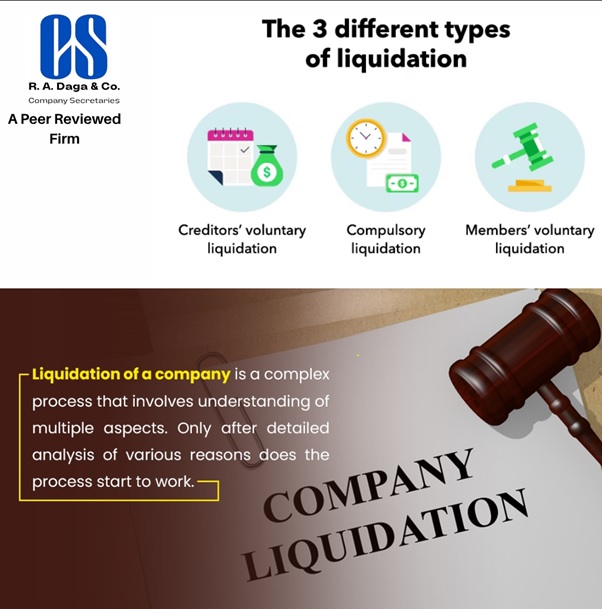
- Voluntary Liquidation – Initiated by shareholders when the company is solvent but wants to shut down.
- Compulsory Liquidation – Ordered by the National Company Law Tribunal (NCLT) on various grounds, including inability to pay debts.
- Liquidation under IBC, 2016 – For companies undergoing corporate insolvency.
The 2013 Act incorporated several procedural safeguards to ensure that stakeholders were adequately protected during winding up.
Key Procedures under the Companies Act, 2013
- Passing of Resolution
In case of voluntary liquidation, a special resolution is passed by shareholders. - Appointment of Liquidator
A liquidator is appointed to manage the affairs and distribution of assets. - Filing with ROC and NCLT
All resolutions and reports must be filed with the Registrar of Companies (ROC) and, where applicable, NCLT. - Realization and Distribution of Assets
The liquidator sells the company’s assets and pays off creditors, followed by shareholders if surplus remains. - Final Report and Dissolution
After the final accounts are approved, the company is struck off from the register.
Highlights of the Companies (Amendment) Act, 2025
The 2025 Amendment was introduced to streamline the liquidation process, enhance compliance, and align with global best practices. Here are the key changes:
- Time-Bound Liquidation
- A strict time frame of 180 days has been introduced for completing voluntary liquidation.
- Extensions will only be allowed under special circumstances, with written NCLT approval.
- E-Filing and Digital Reporting
- All liquidation-related filings are now mandatory via MCA21 portal, with real-time tracking of status.
- Liquidators must file quarterly progress reports online.
- Introduction of Independent Liquidator Panel
- MCA will maintain a panel of certified independent liquidators, ensuring better transparency and faster appointments.
- Enhanced Role of Company Secretary
- Company Secretaries (CS) are now formally recognized as compliance officers during liquidation.
- CS professionals are empowered to certify liquidation-related documents, aiding smoother ROC and NCLT filings.
- Priority to Operational Creditors
- The amendment gives higher priority to operational creditors, especially MSMEs, in the distribution waterfall.
- Audit Requirement for Liquidation Accounts
- The final accounts of the liquidated company must be audited before submission to the Tribunal for dissolution.
Practical Implications for Company Secretaries
With these changes, Company Secretaries play a more active and strategic role in managing liquidation:
- Advising the board on compliance and resolution requirements
- Handling ROC/NCLT filings
- Ensuring documentation as per new digital standards
- Coordinating with auditors, liquidators, and creditors
Conclusion
The Companies (Amendment) Act, 2025 has introduced timely and impactful reforms that will help streamline the liquidation process while protecting the interests of stakeholders. Company Secretaries, legal advisors, and management professionals must stay updated and adapt to these changes to ensure smooth and compliant closures.
For assistance in corporate liquidation, compliance, or NCLT proceedings, feel free to contact our expert CS team.
Need Guidance?
Reach out to us at [csradaga@yahoo.in/80870646020] or visit [radaga.in] for professional assistance on liquidation, ROC filings, and legal compliance.